
Angela Wu
Game/Level Designer


Nightmare - Dying Light Developer Tool
Project Summary
Nightmare is a mod of Dying light that uses best practices, lighting, and color techniques to evoke emotional responses that affect player tension. The output for this project is through theoretical research and the establishment of methodologies using lighting and color to build a tension curve that the player reacts to while interacting with the artifact. In the game, players need to cross through a mental hospital. It contains 9 rooms where I utilized different lighting techniques and colors to raise or lower players’ tension to achieve an expected game pacing, thus enhancing the player’s game experience.
Engine: Dying Light Developer Tool
Game: Dying Light
Level Rooms Show-off
Used Lighting and color to affect player tension
-
Researched on Color Psychology and use different colors in game.
-
Used different lighting technics to create several lighting experience.
-
Design a tension curve.
In my thesis, I combined different lighting and color to affect player tension. I build a environment with a two level hospital building and its front yard and back yard, I also have a sewer area to connect the hospital from interior to exterior.
Tension rank with different rooms

After researching different lighting techniques and color psychology, I started to choose some colors. Based on their ability to evoke emotions, as described in color psychology. I created the color guide for different areas and what tension scale I predicted the player would be. I chose nine different colors and combined them with lighting techniques to put them in 9 rooms. Then I expected the tension curve. I made the following picture:
This is the color theme of different interior area
Color Category
I mainly use the following colors and take advantage of these meanings:
-
Brown – Calming, Insecurity, Suspenseful
-
Orange – Warmth, Eerier, suspenseful
-
Yellow-green – Scary, Sickly, Eerie
-
Purple – Poison, Scary, Sickly
-
Blue – Calming, Cold, suspenseful
-
Red – Danger, Violence
The combination of light and color, adjust the brightness and luminace of the light by setting different light types such as point light source, ambient, spotlight, etc.
BROWN
DARK
ORANGE


GREEN
PURPLE


ORANGE
BLUE
RED

DARK
BLUE

GREY
GREEN
Level Screenshots


For All Major Home Appliances
Designed and built a horror environment with a mental hospital theme
-
Create a horror environment to present the lighting and color.
-
Combined exterior and interior make the place feel more realistic.
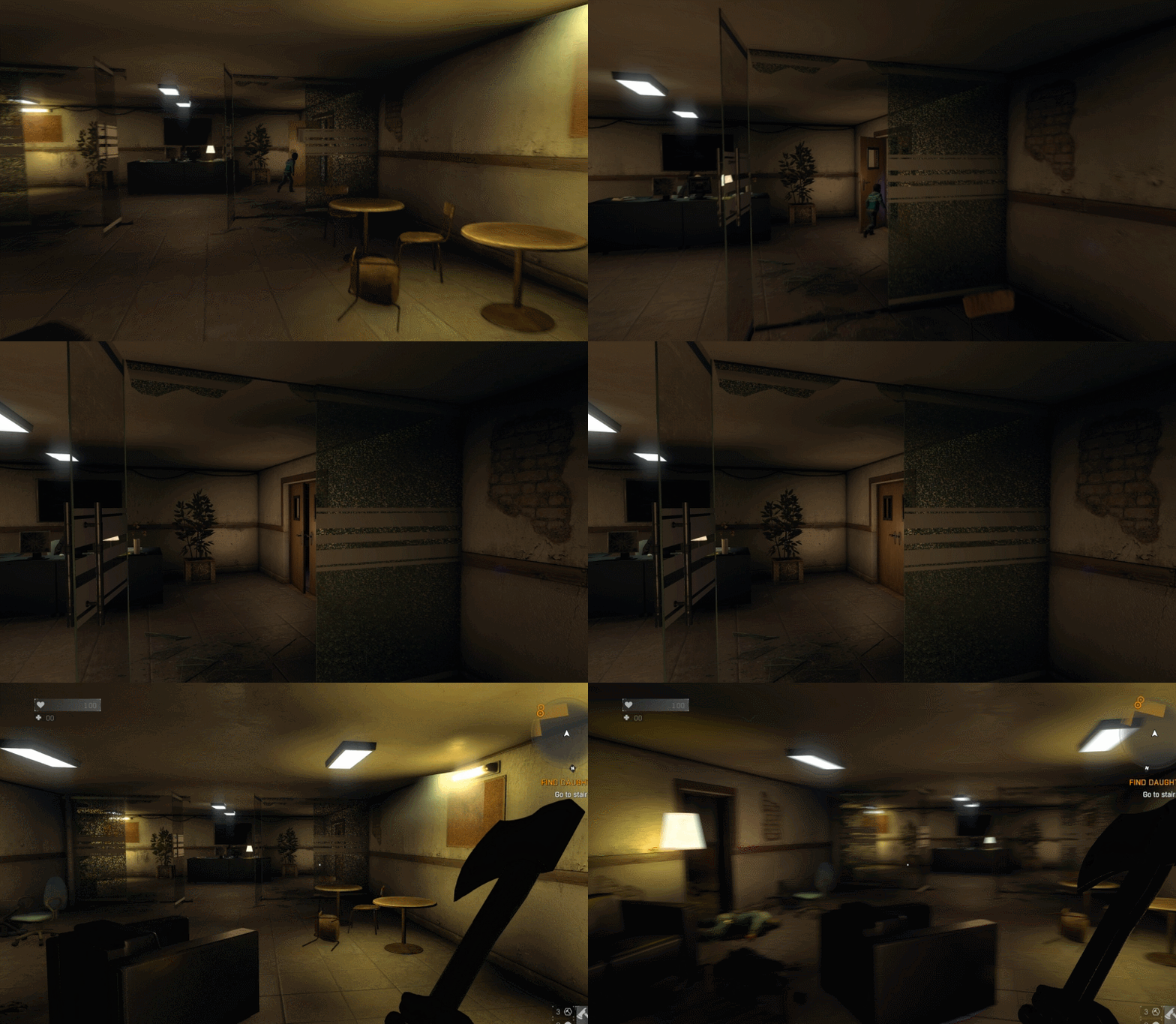
In order to better show my theme, that lighting and color affect the player's tension, I chose to design and build a psychiatric hospital with a horror atmosphere. The whole scene is very large, divided into interior area and exterior area. The exterior area has the gate of the hospital, and the backyard of the hospital. The interior area is mainly divided into upper and lower floors and a sewer area.
I designed the whole level to be done at night time, so that the lights and colors can be better highlighted. I set up different environments in combination with gameplay.


* For better view experience, I adjust environment light to daytime.
Editor Screenshots
Designed Environmental Storytelling to Conveyance Player
-
Craft lots of different movie scenes.
-
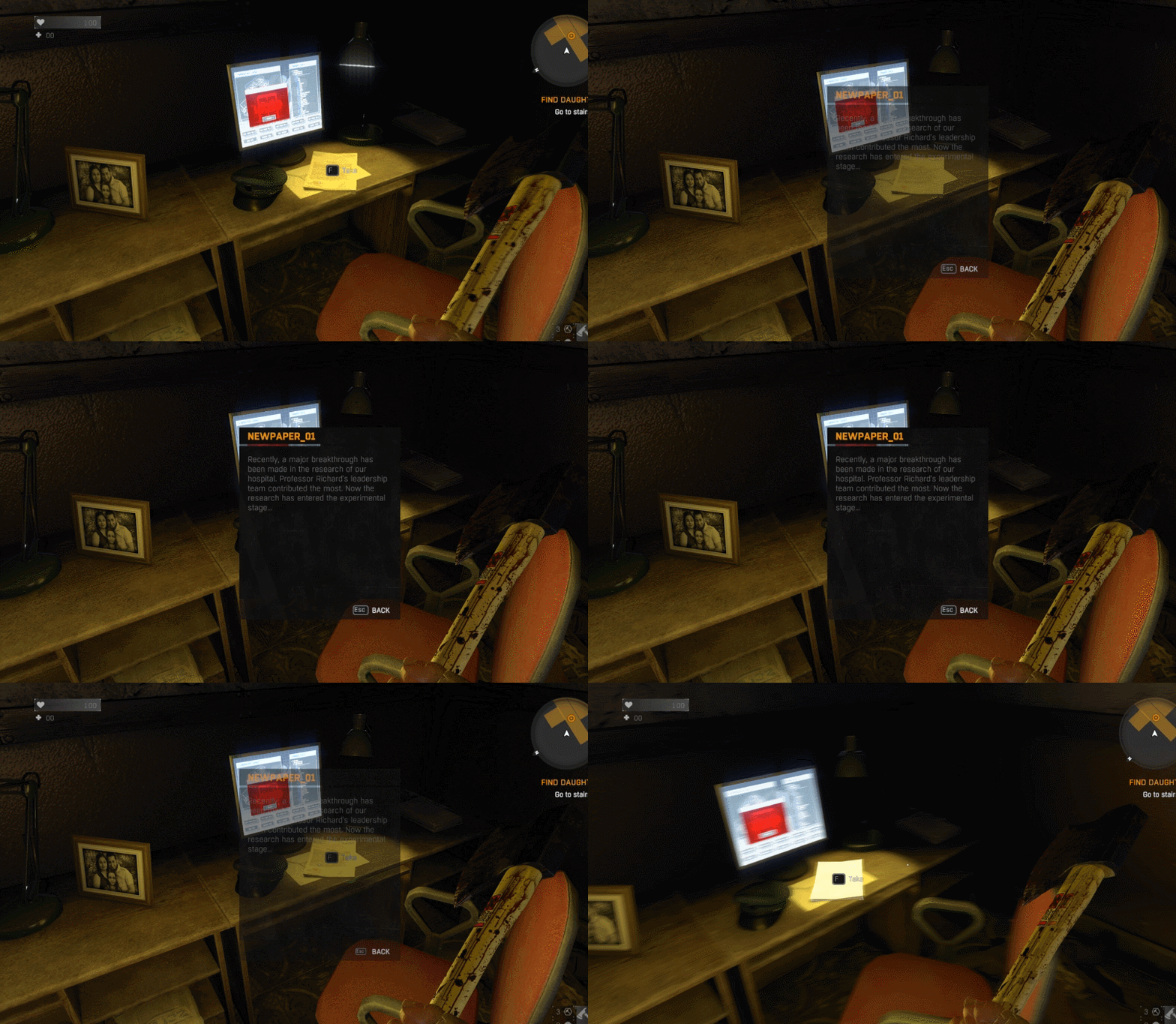
Set environmental storytelling to tell the story and conveyance the player.
I designed a series of movie scenes to tell the game's backstory. Players follow in the footsteps of their daughter "Elizabeth" all the way to the mental hospital. The background of the story I set is that the zombie virus broke out, and the player accidentally separated from his daughter in the process of escaping, and followed his daughter's footsteps all the way to the psychiatric hospital. It's also full of zombies, and no one survives. I set these cut scenes to guide the player to the correct route. Because I started with the player being spawned at the gate of the hospital, a lot of people would be confused here and have no idea where they were going. So I designed this animation of the zombie chasing her daughter and letting her run into the hospital to guide the player into the hospital.

Phone Number
(469) 315-9030
Post-Mortem


Result
-
10 playtesters. I set a survey after the player tester played the level. This chart shows all ten playtesters’ responses; they made the rank of each room, one is the lowest and ten is the highest. This helps me know each player’s thoughts, I can see all players react differently, but the overall structure is similar as I predict.
-
Average rate compare with predicted . More clearly, it can be seen that I ranked the rooms a bit higher or lower than I expected, but it follows the same curve. Players' tension rises slowly, peaks in room 4, decreases, peaks in room 8, and decreases again. I did this to see if I could influence most players to feel the same tension I designed.
Challenges
-
Didn’t isolate the different biases.There was a bias factor that can make the influent player judgment; what I do to control that is to use the same element and put them in a different environment. Like the dead body, based on what I observed, most of the players got in the first room, which had low tension; even I put enemies, they still felt comfortable and chose a relative standard tension scale on the survey, but when players get into the purple and red color rooms, they will feel more stress, even don’t want to move fast into the rooms.
-
Unscientific detection method, I use the survey to let players describe and sort the tension of each room. I mainly use the survey to ask the player the level and description of the tension in each room. I first ask the player to sort the tension of all rooms, then ask about the tension of each room precisely, and let them choose from 1 to 10 and try to exclude their bias as much as possible.
Conclusions
-
By using lighting techniques and color psychology to set a specific emotion and create a level that the player can interact with, allowing the player to reach the desired level of tension.
-
Designer understands factors that impact tension help them better control the level. In order to give players good game experiences.
-
In further research, analysis that is widely used in other fields (film, photography, etc.), and more color meanings in color psychology, benefit the level design.